Spelling
 Are you guilty of this communication
 Writing Tip 327: “Hank” vs. “Hunk”
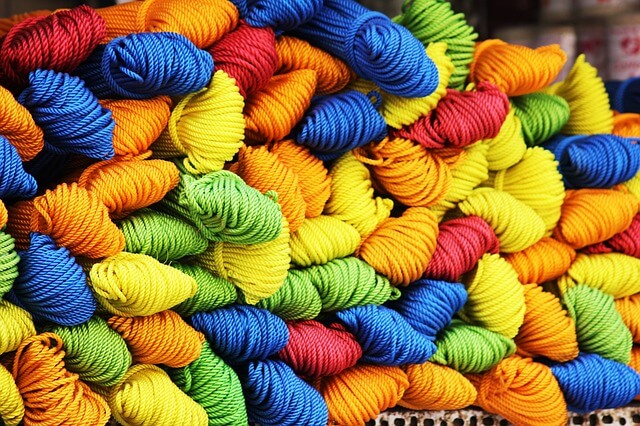
Just when you think I’m going to be writing this tip about a guy named Hank who may or may not be a dreamy hunk, think again.
There are two words that mean a section of something, and these two words are “hank” and “hunk”; however, there’s a big difference between their two meanings. And it has nothing to do with their dreaminess factor.
For example, if you had a tangle of yarn, you’d have a hank of yarn, not a hunk of yarn. Do you know why?
- A “hank” is a coil, knot, or loop, often of a definite length. You can have a hank of yarn or a hank of hair.
- A “hunk” is a piece or portion. You can have a hunk of cheese or a hunk of clay.
If it resembles threads, cords, or twine, use “hank.” If it’s a big chunk of something that’s not stringy, use “hunk.”
Of course,
- “Hank” is also a male name, often a shortened form of “Henry.”
- A “hunk” is also a studmuffin.
A Hank may be a hunk, but that’s beside the point of this reminder.
Happy writing, folks!
Join 550+ subscribers and sign-up for my writing and editing email newsletter for more tips like this.
Writing Tip 326: “Now a Days” vs. “Nowadays” vs. “Nowdays”

Sometimes, when it comes to spelling, we might feel like we’re in a daze, especially when it comes to words that we hear said more than we see written.
If you were writing this phrase in the fourteenth century—if you were lucky enough to know how to read or write in that era—you would have been using a multiple word form, but language has evolved since then.
Nowadays, the correct spelling is “nowadays”—all one word. No hyphens or spaces needed.
Writing Tip 325: Not to “Mix” or “Mince” Words
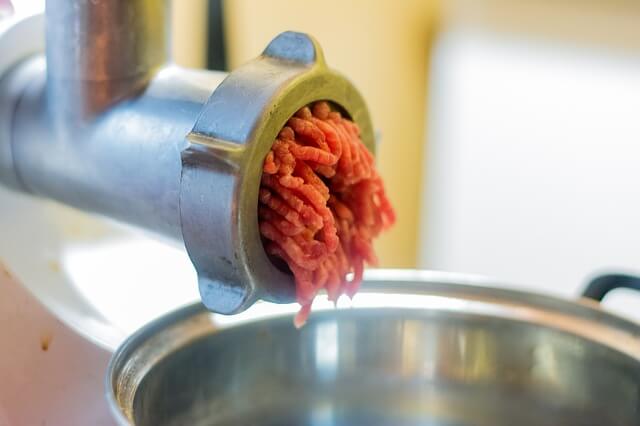
When it comes to the English language, it’s easy to get things mixed up, but this time, I’m asking you to “mince” it up.
Why, you ask?
No, I’m not making mincemeat pies, nor am I apprenticing with a butcher. I say this because there is a difference between “mixing words” and “mincing words,” and I’ve seen this expression terribly muddled.
Remember:
- To “mince your words” means to soften them (just like mincing meat makes it mushy and manageable);
- To “not mince your words” (the more common expression) means to tell it like it is and to not hold back, to not soften or make anything any easier.
- To “mix your words,” when you confuse an expression or use the wrong word, is something that admittedly happens to us all sometimes.
Thus telling someone not to mix their words is a fabulous example of someone mixing their words. Not that you’d ever do this though, right?
Join 550+ subscribers and sign-up for my writing and editing email newsletter for more tips like this.
Writing Tip 324: “Tack” vs. “Tact”
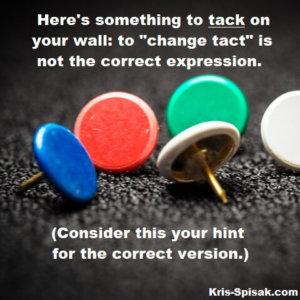 If you think that “tact” is short for “tactic,” well… you’ve got another think coming.
- A “tack” is so much more than a pin to hold up your favorite inspirational quote by your desk. As a noun, “tack” can be a pin or flat-headed nail; it can also be a course or approach, as well as a temporary stitch to hold fabrics together. When it comes to sailing (the origin of the expression to “change tack”), there are even more definitions.
- “Tact” is a matter of social grace and sensitivity. I recommend you have some tact if you’re choosing the correct others’ grammar.
To “change tact” doesn’t really make sense unless you’re talking about a major shift in cultural and social norms in dealing with a complex situation, which I’m guessing is not what you mean.
Remember, tacks can be handy for many things. It’s good to have tact, but don’t overdo it with your word choice.
Join 550+ subscribers and sign-up for my writing and editing email newsletter for more tips like this.
Writing Tip 323: “Scotch Free” vs. “Scot Free”

If your name is Scott and you didn’t make it to the party, you could argue that party is Scott-free, but what about other uses of this phrase?
- Is it about being sober? (Scotch free)
- Is it about excluding anyone Scottish? (Scot Free)
I’ve heard some great thoughts about where this expression comes from—and what the correct version of this expression actually is—but let me put your mind at ease.
Writing Tip 232: “Complimentative” vs. “Complimentary”

It sneaks into our language often enough that it deserves a moment in the spotlight—a moment in the spotlight before we hopefully make it completely disappear.
Remember, “complimentative” is not actually a word. Neither is “complimentive” or any other variation in spelling.
Writing Tip 230: “Under Wraps” vs. “Under Raps”

Under the lyrics of your favorite song, you might hear the base line driving the music. Depending on your musical taste, maybe its “under raps,” but this is the only time you should use this spelling.
When you think of the correct spelling of this idiom, which is “under wraps” by the way, think instead of Egyptian mummies or birthday presents. Think of an adorable puppy in hiding that your landlord doesn’t want you to have.
This expression dates back to roughly 1939, but it’s closely connected with the 15th century origin of the word “wrap.” In its earliest uses, “to wrap” referred to the process of tightly packing up bread, surrounding it with material to keep it fresh and clean. Starting in the mid-1900s, “under wraps” came into use, when referring to tightly covering up an idea.
Just to wrap things up—see what I did there with another “wrap” expression, this one with an origin in the film industry?—there’s no need to keep this writing tip under wraps. Honestly, if you wanted to give it a soundtrack with some intense beats under raps, I’d be okay with that too.
Just know the difference please.
Sign up for my monthly writing and editing email newsletter for more tips like this.
Writing Tip 227: “Leg Work” vs. “Legwork”

The Rockettes do leg work. MMA fighters do leg work. Kids with mad soccer skills do leg work. If you’re talking about research and preparation, your legs probably shouldn’t get as much of a shout-out as you seem to be giving them.
The idea of “legwork,” as a single word, dates back to the 1890s. It seems to have originated in reference to literal running around in preparation for a greater creative or mental pursuit, but today, your legs don’t have to be involved.
Writing Tip 224: “Ravish” vs. “Ravage”

If you’re talking ‘bout the birds and the bees and the flowers and the trees and the moon up above, you might be tackling this thing called “love,” but here’s a hint: if you’re writing about a lover ravaging another, it’s not a happy love story.
To take it up a notch—and maybe a few decades forward—let’s talk about what’s happening when it’s getting hot in here.