Sure, your eye might land on the iceberg, but do you see all of those flat, floating sheets of ice? That’s what we’re talking about here.
Sometimes, you’ve just got to go with the flow, unless you’re riding along on an iceberg. Then, perhaps, it’s time to reconsider—your spelling among other things.
Actually, an “iceberg” is a bit misleading. When we’re talking about an “ice floe,” we’re not talking about giant mountains of ice.
These pins might be beside a pin cushion, but they are not besides it.
Some English language questions feel a bit prickly, but this shouldn’t be one of them.
As similar as they might appear at first glance, the debate between “beside” vs. “besides” is not similar to that of “toward” vs. “towards” or “backward” vs. “backwards.” Most of these are words that show physical relationships (ahem, “prepositions” for those who care about formal names), but one of these things is not like the other. Do you know which one?
What is distinctive about the kitten in the middle? There is a distinct, observable difference that distinguishes her from her litter-mates. You could say she’s distinctively colored. Or you could forget all this and just go cuddle a kitten…
It is my distinct pleasure to delve deep into the distinct differences between “distinct” vs. “distinctive.” How do we distinguish one from the other? What is distinctive about each? How are “distinct,” “distinctive,” and “distinguished” not so distantly related? It’s time we figured this out.
I know I’m not the only one who’s written the word “distinctive” and then paused—convinced it should actually be “distinct,” or should it be?
I don’t know if birth order has anything to do with grammar persnicketiness. Do eldest children have a tendency of dotting their i’s and crossing their t’s? Are youngest children inclined toward utter grammar rebellion?
Was that first known person to drop an “OMG” in 1917—yep, I said that date correctly, 1917—was he a youngest child? I bet he was.
Was the member of One Direction who once jumped off the stage to correct the grammar on a fan’s sign an oldest child? I have no idea, but that’s my guess.
Here’s what I do know:
Lindley Murray, often called the “Father of Grammar” was an eldest child.
Noah Webster, American English renegade, was the 4th child out of 5.
Ben Franklin, English language revolutionary, was the 15th child out of 17. (Yikes, power to that mama…)
This is the Words You Should Know podcast, Season 2: Episode 9, and it’s time to go deeper.
And then there’s the Quiver Tree, native to Africa, also known as kokerboom in Afrikaans. Does it ever quiver when flocks of birds leave its branches? Is there any legend about its quavering voice? I don’t think so, but the hollow stems of this massive variety of the aloe family have a long history of being used for arrow quivers. Cool, huh? Plus, these quiver tree quivers probably made many people quiver over the years. (How’s that for a correct but slightly complicated sentence?)
Your hand might quiver. Your voice might quaver. Your arrows might sit at the ready, but what’s their location strapped to your back called again?
That’s right. The word “quiver” can be tricky because it means different things—many of which are ready to be a part of an action-packed story—but it doesn’t mean everything you might think it does.
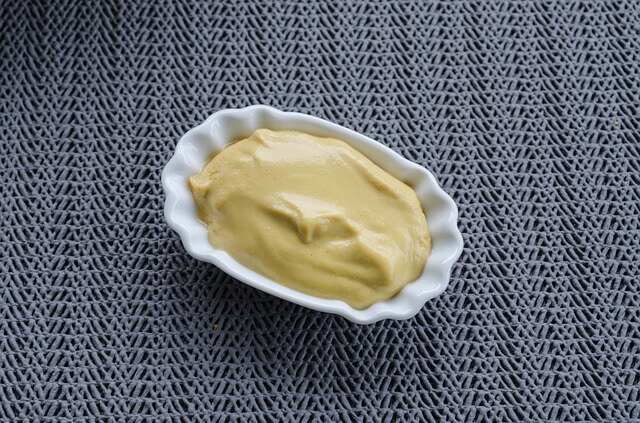
To “pass muster” is completely different from “passing mustard.” One involves acceptance and one might just involve your hot dog.
Dinner parties with a crowd you don’t know well can be complicated. Sometimes, you need to dress and act appropriately, and sometimes, you need to give your neighbor the appropriate condiment.
So next time you’re worried about whether the expression is “to pass muster” or “to pass mustard,” remember:
If you want to get technical, you can “riffle” through the pages while you’re in the process of “rifling” through a collection of documents. Would a thief pause to appreciate the linguistic proximity? Probably not. But you can at least enjoy it.
This isn’t a gun debate. It’s a verb debate. And neither of them has anything to do with firearms.
There is a difference between “riffling” and “rifling” through the pages of your favorite writing reference book. Both are possible. But I’m guessing there’s only one that you mean.
And seriously, if you’re confused, please get those guns out of your head. That’s not where I’m going here.
Some people have horseshoes for luck. Here’s one for luck with your spelling.
You can see it, can’t you? There’s the racehorse in the starting gate. He’s hoofing the ground. He’s whinnying. He’s chomping on his bit impatiently waiting for the starting gun to fire…
But the problem is, “chomping at the bit” isn’t the correct expression. The second problem is that “champing” and “chomping” are so incredibly close, this distinction is confusing in itself.
This podcast is on one of my favorite explorations. It’s all about words you wish existed.
Sometimes the world seems annoyed that there just isn’t a word to express exactly what you want. There’s no English word for that intimate feeling of sitting around a fire in the winter with close friends (though it exists in Danish: hygge). There’s no word for the feeling of anticipation when you’re waiting for someone to show up at your house and you keep going outside to see if they’re there yet (though it exists in Inuit: iktsuarpok). Or what about the word for that panicky hesitation just before you have to introduce someone whose name you can’t quite remember? (The Scots call this tortle.)
What’s the word for the act of annoying older brothers (vybafnout)? Or the scratching of your head in order to help you remember something you’ve forgotten (pana po’o)? Or that old trick where you tap someone lightly on the opposite shoulder from behind to fool them (mencolek)? Just look at Czech, Hawaiian or Indonesian respectively, and they have your answers.
Of course, sometimes the word you need seems simple. How do you differentiate a singular versus plural “you”?
But here’s the secret. For this one, at least, the English language already has an answer.
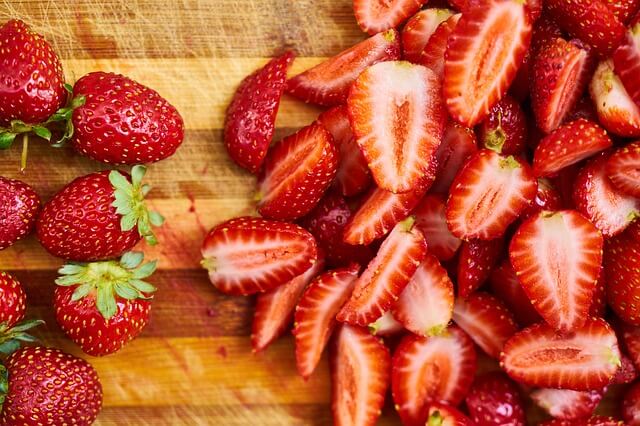
Drool-worthy, right? But what does that mean for your appetite?
When people talk about enticing you, they aren’t talking about making you drool. The question about how do you spell “whetting” your appetite comes up often, and I think it often comes back to confusion about that saliva.
You see something delicious and you salivate. Sure, I get it, but that has nothing to do with this expression.