Over Thanksgiving I plan on eating a plethora of delicious food. You know what I mean? Seriously, do you? A “plethora” is an overabundance, as in a glut, as in too much of something. A “plethora” isn’t just lots. It’s an excessive amount. But you know what, on this holiday full of warmth and family and graciousness – and did I mention the homemade lattice-topped apple pie? – the calories don’t count. That’s my philosophy anyhow.
There’s so much to be thankful for this year, and correct word usage at the table is one of them. (Oh, how my family must love me!)
These two words aren’t actually interchangeable, although a lot of people use them as if they were. “Since” refers to time. “Because” refers to causation.
For example: Since I gave birth to my second child, keeping up with my writing tips is a whole new challenge. Because I gave birth to my second child, I didn’t have time for NaNoWriMo. Do you see the difference? In the first sentence, we’re talking about a time period – between then and now; in the second, we’re talking about cause and effect.
Yes, we’re celebrating the arrival of the newest intern on the K. S. Writing team. She’s already supportive of her mommy’s writing career, waiting to arrive until I finished a major manuscript rewrite. (Manuscript rewrite? Yes, it’s true. If you want to see the latest opening, check it out here.)
Everyone has their version of the South. Here’s mine. Wow, do I miss the mountains this time of year.
When people misspell the contraction “y’all,” I can’t help but cringe. Sure, it may be the same way others cringe upon hearing the southern colloquialism, but I can’t help it. It’s not a creation of an invented dialect. It’s a contraction, people. A contraction. As in one word that combines two others.
Is not –> Isn’t
They will –> They’ll
I have–> I’ve
It is –> ‘tis (Yes, I’m a Shakespeare fan too)
You all –> Y’all
What is with this “ya’ll” form I keep seeing? Is this some form of Yankee trickery, trying to transfigure a celebrated Southern idiom into a nonsensical, Red Neck Comedy Tour inspired tomfoolery? I protest, y’all. I utterly and whole-heartedly protest.
Here’s one to watch out for in a big way. Make sure you spell “emulate” correctly.
You know what’s a funny and/or terrible auto-correction? “Immolate” when you meant “emulate.” Don’t tell your child to “immolate” his or her well-behaved friend. That might not end well.
Remember:
“Emulate” means to imitate with effort to equal or surpass;
“Immolate” means to sacrifice, slaughter, or to kill by fire.
Be careful with matches, folks, and happy writing!
I knew a certain toddler who liked to “grin and bare it,” but that was more along the lines of laughing as he ran around his room before we could get him into his pajamas. The expression most people are looking for here is “grin and bear it”—“bear” spelled like the like the animal, not “bare” like a naked giggling child.
In conclusion:
“Bear” n. – a woodland creature (e.g. Yogi, Fozzie, Smokey…)
“Bear” v. – 1) to hold up under pressure (i.e. grin and bear it), 2) to support (i.e. to bear a load of bricks), 3) to produce/bring forth (i.e. to bear fruit, to bear a child).
“Bare” adj. – 1) to be unconcealed, naked, 2) to be sparse (see also “Bare” v.)
While I’m all for confidence, people, let’s try to keep the grinning and baring it to a minimum. Okay?
This one seems so obvious. Why, you might ask, am I even taking the time to talk about something you clearly learned in first grade? Well, my friends, the English language is full of exceptions–and many of the “a” vs. “an” exceptions are looked over time and time again.
When you come upon a horse with a long horn upon its head, is it “a unicorn” or “an unicorn”? When you make a mistake, do you call it “an honest error” or “a honest error”? First reactions may say that “an” is always the article used before words starting with vowels, and “a” is before words starting with consonants; however, here are those tricky exceptions I was talking about.
You need to use “an” before an unsounded “h,” as in “honest,” “hour,” or “honor.” You need to use “a” before words that start with the letter “u,” in cases where the sound echoes a “y,” as in “unicorn,” “union,” and “ukulele.”
Stop thinking purely spelling with the a/an rule. Think about the sound. In most cases, if it sounds like it starts with a vowel, go with the “an”; otherwise, “a” is a likely bet. Got it?
Thanks for the reader request on this one. It’s a simple rule, but people confuse it all the time. Does anyone else have any questions about rule exceptions?
There’s a scene on a street corner. A lone woman shouts excitedly to herself, her arms gesturing through the air like she’s conducting the most maddening of symphonies. Years ago, she might have been a bit mad. In 2013, she’s just on her Bluetooth. A passerby witnesses the outburst. But what if there is an audience of more than one? Are they “passersby” or “passerbys”?
Remember to pluralize the person, the passer, not the preposition.
“Passersby” is correct here, even though you might want to tack that “s” onto the end of the word like most plural cases.
You’ll notice this one incorrect in writing more than in speech. Do you use the correct spelling?
Perhaps you read “historical romance.” This would indeed be different if it was “historic romance”–more Napoleon and Josephine Bonaparte and less unlaced corsets, cravats, and smelling salts. Though perhaps I need a better example, the French being the French and all.
While “pre-historic” might cause some confusion to this lesson, remember that:
“historic” is an adjective denoting an important event in history;
“historical” means something simply having taken place in the more distant past.
The invention of the internet was historic; the cloning of Dolly the sheep was historic; the founding of this writing tips blog was historic (no?). But none of these examples are historical. See the difference? Edit yourselves carefully.
You’ve got to love confusing homonyms – or perhaps near homonyms in this case. So often we know what we mean but then we just spell the first thing that comes to our mind. Spell-check doesn’t help in these cases, does it? Maybe Microsoft has someone working on that. Or they have enough to worry about at present. Maybe there’s hope in Google.
Either way, until a tech giant saves the spelling impaired, here are some simple reminders. “Defuse” means “to make less dangerous, tense, or embarrassing.” Its simplest use is “to remove the fuse from” – as in a bomb. With a pocket knife and duct tape. While doing work for the Phoenix Foundation. (Okay, perhaps the MacGyver piece is unnecessary for the exact definition, but you get the idea.) “Diffuse,” on the other hand means “to spread or scatter widely; to disseminate.” For the physics buffs out there, its simplest definition is “to spread by diffusion.” For those of us for whom this means nothing, think about “diffused light” – sunlight breaking through the morning fog as it lifts off the river. Illuminating a chase of one of Murdock’s lackeys by a spy in aviator sunglasses and a bomber jacket. A spy who’s rigged up an explosion downstream with a shoe lace, a pocket watch, and a potato. (Too much?)
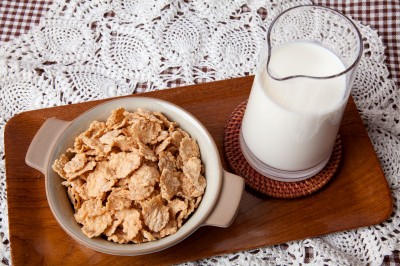
One of these phrases could be used when you’re intensely studying something; the other is what you do when you add milk to your cereal.
“To Pore,” meaning to meditate deeply, was once a commonly used verb, but it’s fallen out of fashion along with the popularity of Roman numerals and illuminated manuscripts. This sense of “pore” most likely derived from two Old English words: spyrian, a verb meaning “to investigate” and spor, a noun meaning “a trace, vestige.” The contemporary phrase “to pore over” is really this old verb’s last burst of life, so it’s time for us to respect our elders. Don’t confuse this historical word with a splash over your morning Wheaties. Am I right?
 Over Thanksgiving I plan on eating a plethora of delicious food. You know what I mean? Seriously, do you? A “plethora” is an overabundance, as in a glut, as in too much of something. A “plethora” isn’t just lots. It’s an excessive amount. But you know what, on this holiday full of warmth and family and graciousness – and did I mention the homemade lattice-topped apple pie? – the calories don’t count. That’s my philosophy anyhow.