I don’t know if this sheep was ever really your friend, but I don’t doubt he’s unfriending you right now.
Did you know “unfriend” isn’t a new word? To “unfriend” someone might make you think of social media, but according to the Oxford English Dictionary, the action of no longer being friends with someone has been called “unfriending” since 1659.
My personal favorite part of this word history is that “unfriend” has been recorded as a noun as far back as 1275. Now, I’m not quite sure if a medieval “unfriend” is the same as a “frenemy” or is someone you’ve simply cut ties with, but either way, aren’t you excited to know that language doesn’t evolve as quickly as we think it does sometimes?
This rowboat with the stretched out legs inside of it connotes a sense of relaxation and an adventurous spirit. Nothing is being denoted here. Do you understand the difference?
If you’re using words like “connote” and “denote” to elevate your communications, you’re already set to take on the world, using your vocabulary to strut your stuff. The problem comes when you don’t actually realize what you’re saying.
That’s never a good thing.
When it comes to “connote” vs. “denote,” think of “connections” and “definitions.”
When it’s cold enough to freeze bubbles, these are the kind of stories to keep your insides warm and giggly.
Some etymology stories might be the product of fiction, but sometimes, they are so good, you have to hope that they’re true. This is the case of the tale concerning why we call long johns, “long johns.”
Merriam Webster tells us that the term “long johns” has been used to describe this long underwear since 1941, but when you dig a little deeper, you can come across the same story again and again:
In the late 1800s, an Irish-American boxer named John Lawrence Sullivan rose to fame because not only was he unbeatable, not only did he win the last bare-knuckle world heavyweight title bout in the 75th round after recovering from vomiting in the 44th, not only did his trainer have to drag him away from bars the full duration of his training. but he was also recorded saying that, he could “lick anyone, anytime,” and would regularly jump into the ring or any other challenge in his long underwear tucked into his socks, ready to go. He did this so commonly, fans began calling the long underwear by his name.
Is this the real origin of the term “long johns”? Maybe. It’s the consistent reference though it’s not 100% confirmed. But whether it is or isn’t, can we all at least appreciate that there was a boxer so confident and so proud that this is truly how he stepped into the ring? Nightmares about stepping on stage in your underwear have nothing on this guy.
That’s something to keep you warm on a cold winter day.
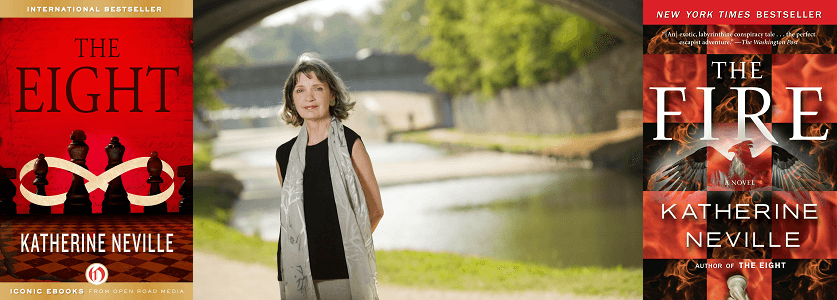
Many writers aspire to craft intrigue, to evoke a fascination in history and the world that we live in through page-turning plots and three-dimensional characters, but few make an impact as great as international bestseller Katherine Neville, who I am honored to have joining me for the following Authors on Editing interview.
Katherine Neville’s colorful, swashbuckling adventure novels, in the epic “Quest” tradition, have graced the bestseller lists in forty languages. But her books remain hard to pigeonhole:
Neville herself has been dubbed “the female” Umberto Eco, Charles Dickens, Alexandre Dumas, and Stephen Spielberg. Her work has been reviewed and has received awards in categories as diverse as Mystery, Thriller, Historic, Romance, Science Fiction as well as classical literature. Publishers Weekly described Neville’s works as having “paved the way for books like The Da Vinci Code.” In a national poll by the noted Spanish journal, El Pais, her novel,The Eight, was voted one of the top ten books of all time.
Itty bitty, tiny little hiccups in our writing might not always be noticed, but that doesn’t mean we still shouldn’t try to do better—even when some people say these mistakes are okay.
“Minuscule” is a big word with a tiny meaning. Literally. It means to be incredibly small. It comes from a diminutive of “minus,” or minusculus in Latin.
“Miniscule” is a confused spelling, taking the idea of “mini” and mixing up the words. “Miniscule” isn’t the standard spelling. If you were in a spelling bee, it would be considered incorrect. However, because this word is misspelled so often, it’s starting to become an alternate form. Mini-me probably isn’t behind the surge of this spelling faux pas, but maybe remembering his work with Dr. Evil might help you remember that this isn’t the accepted usage you’re looking for.
There’s a strategy for being patient and waiting for something difficult to pass, and then there’s falling down after your golf ball lands in a sand trap. Which one do you mean?
The expression you’re looking for is to “hunker down.” To “bunker down” is not actually a thing.
No matter how experienced a writer may be, there’s magic that can happen when you join a creative workshop with a masterful teacher. Artistic juices—no matter how active or how dormant—can come alive, and inspiration is rekindled.
This is how I feel whenever I have the pleasure to hear Douglas Jones speak about the creative process—whether in a workshop, a literary salon, or a conversation over lunch at a writing conference. I’m honored to present the following interview with him, which is chock-full of valuable advice and inspiration.
Douglas Jones has written and seen produced more than forty plays and screenplays, including the musical Bojangles (music by Tony Award-winning composer Charles Strouse, lyrics by Academy Award-winning Sammy Cahn), The Turn of The Screw, and his award-winning Songs from Bedlam. His docudrama 1607: A Nation Takes Root is on display every day at the Jamestown Settlement & Yorktown Victory Center. He was awarded the Virginia Commission for the Arts Playwriting Grant in 2006, the Martha Hill Newell Playwrights Award in 2015, and the Emyl Jenkins Award for Promoting Writing and Writing Education in 2016. He teaches memoir, playwriting, and other classes at the Virginia Museum of Fine Arts and The Visual Arts Center in Richmond, Virginia, and is a voting member of The Dramatists Guild. He lives in Richmond with his wife Harriett and his daughter Emma.




 There’s a strategy for being patient and waiting for something difficult to pass, and then there’s falling down after your golf ball lands in a sand trap. Which one do you mean?