Uh oh, did the Teenage Mutant Ninja Turtles get it wrong? Some stuffy grammarians might just raise their noses, insisting these were “teenaged” mutant ninja turtles. In fact, that was the first form of the word and therefore correct, they’d say. But don’t listen. They’re wrong.
I don’t know what it is about this word in particular, but for some reason certain people insist that “teenaged” came first. My guess is that they’re making a connection to words like “ice(d) tea,” “skim(med) milk,” or “whip(ped) cream,” where the final “d” has been lost over time. However, the first use of “teen-age” was in 1921. “Teen-aged” didn’t appear until the early 1950s. Of course, the hyphen was lost over time too.
So what does this all mean when it comes to what form is correct? In American English, “teenage” is the most common and most accepted form. So don’t call out those ninja turtles – not that you’d want to anyway. They’d probably win the fight.
The Sochi Olympics reporters have had questionable use of feminine descriptors. I’m not even talking about the difference in “Women’s” Hockey versus “Ladies’” Figure Skating or the use of “girls” when commentators wouldn’t dream of calling male athletes “boys.” Those are semantic conversations unto themselves, and this isn’t the place for them. I’m talking about the use of “women” as an adjective. (Pssst… hey guys, put down your vodka samples. “Women” is a noun!)
When you’re looking for the adjective form of “women,” “female” is usually your best bet; however, time and time again, writers are using the wrong part of speech.
Sally Fields in Forrest Gump (c) Paramount Pictures, 1994
Everyone knows Forrest Gump’s mama was a wise lady, but she’s also a grammarian role model, nailing a subtle rule few know or follow. Everyone likes a good simile – especially Southerners – but whether you use “like” or “as” in your comparison is not simply a matter of pure choice.
To be brief, use “like” when no verb follows, and use “as” when the following clause contains a verb. We could get more technical and discuss prepositions and objects of the preposition versus the use of conjunctions, but that’s all of the dry grammar that scares people away from English classes. I like to keep things simple.
Back to Mama Gump:
Example 1: “Life is like a box of chocolates” – note no verb follows, so “like” is correct.
Example 2: “Stupid is as stupid does.” – since “does” is a verb, “as” is correct here.
In closing, to quote Forrest, “And that’s all I have to say about that.” Got it?
However, sometimes, the addition of an “s” is not as simple as differentiating singular and plural. Let me mess with your brain here. The following equation is also correct:
Costs + Costs = Cost
Whoa. Mind-blowing, right?
A client came to me with this question earlier in the week, and I thought it was a great one. “Cost” in its singular form refers to the sum of a total group; “costs” refers to all of the pieces within that group. For example, “the cost of a service includes material costs and labor costs.”
From legal contracts to discussions of budgets, the difference between “cost” and “costs” often befuddles people. But no longer you, savvy reader. No longer you.
Do you have the inability to feel? If so, you feel badly. If you’re talking about your state of mind, you feel bad.
Let’s take a moment to discuss sensory verbs: feel, taste, smell, sound, look, appear, and seem. If you are looking for a word to modify the noun before the verb, use an adjective. If you are modifying the verb, use an adverb.
For example:
“James Brown feels good.” Good is an adjective, modifying James Brown. If James Brown was having a rough day, he’d feel bad. If he felt “badly,” he would either be bad at empathizing or have some sort of sensory condition worth going to the doctor about.
To give another example:
“Dinner tasted delicious,” would be correct. If dinner tasted “deliciously,” I’d have all sorts of other questions about the live thing you were eating and then what perhaps it was eating.
It’s all about those 3rd grade basics: what adjectives and adverbs modify. I know we all slip up, so consider this your friendly reminder.
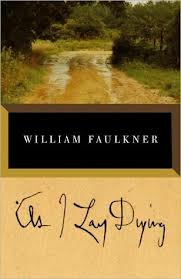
No offense to Faulkner, but I think he got one of his most famous titles wrong – then again, “While I Lay Dying” doesn’t really have the same ring to it. The question came up last week: what’s the difference between “while” and “as”? It’s a great query because there is a little-known, subtle change in meaning.
As you know, both words denote simultaneous action, but do you know the difference in the following two sentences?
“As Erin petted her cat, she wondered about word choice.”
“While Erin petted her cat, she wondered about word choice.”
At first glance, they seem to say the same thing; however, one of these is a brief action and one is longer. Erin either patted her cat on the head and walked away, or she cuddled up on her couch with her cat for the evening, continually stroking its fur while reading a good book. Word usage tells us the difference.
To be specific, “as” is used for a short action, and “while” is used for a longer one.
“As Faulkner picked up his pen, he debated his title.”
“While Faulkner wrote his book, he debated a grammatical rebellion.”
It doesn’t take long to pick up a pen. It does, however, take a long time to write a book. See the difference?
In As I Lay Dying, Addie’s death is a slow one, not immediate; therefore, “while” should be the appropriate word choice. But we can chalk this one up to artistic license. We can give Faulkner that.
As a closing note, here, I like to believe that the usage of “Lay” in this title is simply the past tense of “Lie.” If it’s present tense, we have a whole other lay/lie debate. (Oh the dramas of word choice!)
What is the past tense of pet? It’s a simple question, one you’re sure to answer with confidence. Then doubt creeps into the shadows of your mind. Surely, you know the correct answer. Of course, you know the right answer. Don’t you?
Today, Niki pets her dog. Yesterday, Niki… wait for it… petted her dog.
“No, no, no,” you might say. “The past tense of pet is definitely, ‘pet’!”
To those of you holding strong to your (incorrect) convictions, let me introduce the odd story of a regular verb made irregular. The past tense of “pet” has been “petted” for over 500 years. Fairly recently, “pet” has become regularly used and accepted in informal settings – largely by Americans, rebels that we are; however, in edited text, “petted” holds strong as the correct version.
We cut the cable cord in our house two years ago, and we haven’t looked back. Except for perhaps at our spelling. Did we cut the cord? Or was it the chord? The whole situation struck a chord with me (or was it a cord?) – having that moment of staring at a word for so long, not sure which was the right one. I suppose I talk about those word confusions a lot on this blog, but whether it was new mommy-hood or something else, I had a moment of loss.
So as a refresher, “chord” discusses a musical combination; “cord” was the word I was looking for, as in a rope. To “strike a chord,” harks back to that music reference, meaning to find something familiar; to “cut the cord” means to cut ties with, as in the umbilical cord.
It’s funny how our brains leave us at times. That’s why this blog’s here, though – a resource for the moments of temporary bewilderment, mine and yours.
There’s a debate that arises every year—often intensified by champagne or eggnog. Is it “ring in the new year” or “bring in the new year”? Can you once and for all have a definitive answer to give that nut still wearing a Rudolph sweater? Perhaps, he’s thinking the same thing about you, the crazy lady in a little black dress who debates locution at holiday parties. (Or is that just me?)
Well, I hate to say it, but you’re both right. Though only different by a single letter, both expressions are recognized as standard. “Ringing in the new year” refers to the old tradition of celebrating beginnings and endings with bells—à la Alfred Lord Tennyson’s 1850 poem “Ring Out, Wild Bells.” On the other side of things, “bringing in the new year” references ushering in the new beginning. Thus, you can bring in the new year by ringing in the new year. How’s that for a fun answer to the debate?
Interesting side note: did you know New Year resolutions date back to ancient Babylon when people made good behavior promises to the gods? Any big promises you’re making this year?
 Are you writing a fictional novel? Really? Is there a book inside of the book that you’re writing? Confused? Yes, I think you might be.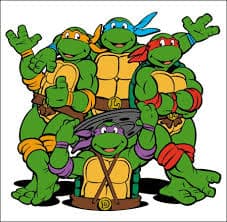


 Let’s be wild today and think about an equation.