This is what this poor interned cheetah thinks of your typos.
Some typos—like turning “emulate” into “immolate”—take a dark turn, but then you have other typos that are dark no matter what way you look at them. “Internment” vs. “interment” is one such example.
When you’re looking for a black and white, right versus wrong answer, please don’t make the question be anything about the usage of “embed” vs. “imbed.”
Are fossils embedded in stone or imbedded in stone? Is the video of Grammartopia-RVA embedded on my website or imbedded in my website? Is a journalist embedded with soldiers or imbedded with soldiers?
Clearly, grammar is my jam. I just love it—and I’m going to argue the expression “That’s my jam” applies to more than just favorite music—so when I see words misused, I just have to stop and think, “did you really mean to write that?”
For example, if I see the phrase “door jam,” my imagination concocts all sorts of nonsensical ideas from jelly squeezed out of doors to architectural traffic congestion to something right out of the Mad Hatter’s tea party.
However, I’m guessing none of these are what a writer intends to imply.
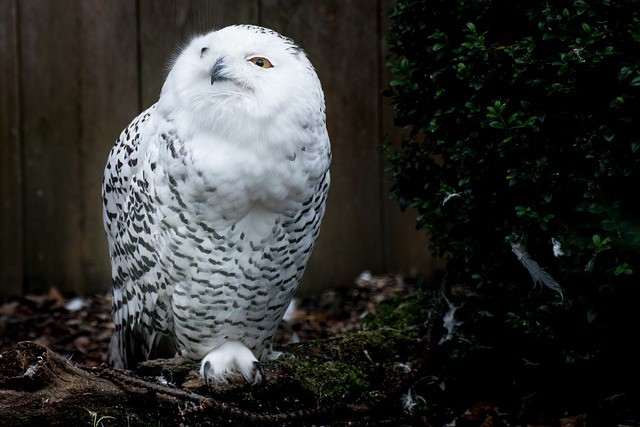
I might not be a fan of birds, but this one looks pretty darn wise. He knows something, doesn’t he? I bet he understands the differences between these spellings.
Once upon a time, you thought language was simple, didn’t you? Then came the moment you started to over-think the differences between “onetime” vs. “one time” vs. “one-time”—and your boggled mind hasn’t been the same since.
I jest… but then, maybe I don’t. These are the subtleties that catch us and take our writing back a step.
When you start spotting a lot of these guys, do you know what you need?
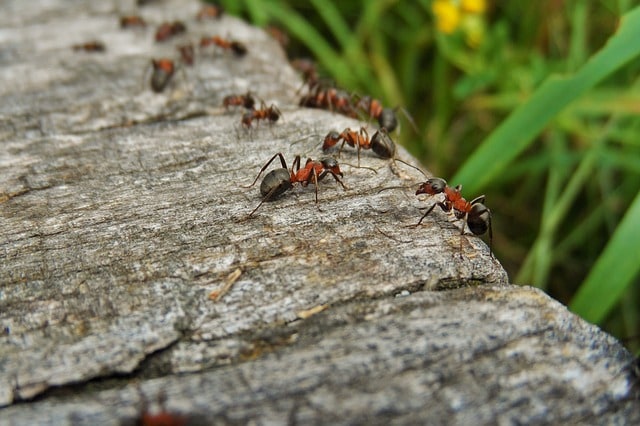
So, I want to return to the conversation about nervous ticks and nervous tics. One might have a nervous tic when there are too many insects about, but a tick might be nervous if there is use of repellents/repellants.
But that begs the question:
How do you spell repellent/repellant? Repellant with an A? Repellent with an E?
Answer: “repellent”—with an “e.”
But before you confidently walk away from this “repellant” vs. “repellent” conundrum, let’s pause for a moment, because the other spelling isn’t completely incorrect.
I just might be catching you using a phrase that doesn’t actually exist with this one. Think fast. Which one is correct? “Shore up” or “sure up”?
Psst… here’s your hint
When a plan at work needs some extra strategic support, when your offensive line has some major gaps, or when your sandcastle is falling down, what do you need to do?
A four-leaf clover won’t help your cause with this one. (And, yes, I know, we should be talking shamrocks, not four-leaf clovers. How’s this for a segue to that word debate?)
You’ve got to ask yourself, “do I feel lucky?” Well, do ya, punk?
This is what I feel like saying every St. Patrick’s Day when people toss about bad wording among drunken Irishmen (and drunken pretend Irishmen too).
Before someone irate corrects you on this one, let me be clear: if you’re going to abbreviate St. Patrick’s Day,
How does one eek/eke out a living as an ostrich farmer?
Eek! That’s the sound of me squealing either because I’m scared to death of ostriches or because spellcheck once again was not your friend.
If you’re writing about “eeking” out a living, maybe it would make sense if you’ve totally nailed the horror movie scream and are constantly cast in roles in this genre. Or maybe if you’re tending ostriches and those giant freaky birds are good at sneaking up on you. However, the expression in its correct form is to “eke out a living.”
Love him or hate him, but you can partially credit Kurt Cobain for a shift in spelling that has occurred in the past twenty-five or so years around this(these) word(s).
Oh wait, wrong type of nirvana… never mind
What do you think of when you hear, “Smells Like Teen Spirit,” “Come As You Are,” and “Lithium”?
Nevermind. No, I’m not discounting my last question. “Nevermind” was the name of Nirvana’s 1991 album.
What fascinates me is that parallel with this release is the growth of “nevermind” as one word, rather than “never mind,” the two word form. It didn’t start with Kurt Cobain, but there’s a good chance that this album title played a major role in this spelling shift.


 When you’re looking for a black and white, right versus wrong answer, please don’t make the question be anything about the usage of “embed” vs. “imbed.”
 Clearly,