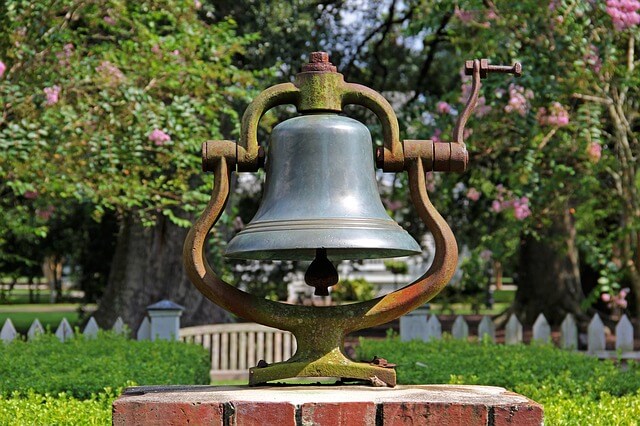
I hope this is the end of your ring/rung vs. wring/wrung confusion.
Let’s talk about “Ring” vs. “Wring” and “Rung” vs. “Wrung.” I think that’s the best place to start with this idiom that is misspelled so often.
I know spelling can sometimes put you “through the wringer” (or is it “through the ringer”?), but it’s time to pay attention and get this right.
If you’re wringing your hands because of an alarm bell ringing, I get it. I do. But there’s a difference that we need to understand. Your hands aren’t making any noise. Go ahead. Try it. I’ll wait.
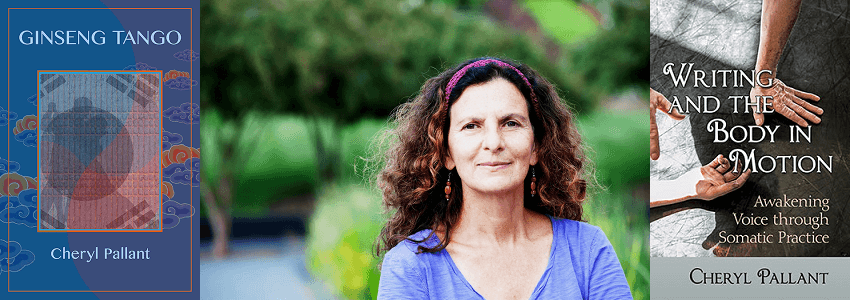
Years ago, someone told me that taking a writing class with Cheryl Pallant would be unlike any workshop I’ve ever taken, and whoever that person was—I wish I remembered!—he or she was absolutely right. Tapping into the creative energy of your body as it moves stimulates the writing mind in ways I hadn’t experienced before.
Ask me, and I’ll tell you a story about the astounding mind-body connection of that first class with Cheryl seven years ago. But in the meantime, I’m honored to showcase author, teacher, and creative guru Cheryl Pallant and to share her thoughts on her editing process.
Cheryl Pallant is the author of several books of poetry and nonfiction, most recently Ginseng Tango, Her Body Listening, and Writing and the Body in Motion: Awakening Voice through Somatic Practice. Her stories, poems, and essays have appeared in places like New York Quarterly, Confrontation, and Fence and in anthologies like An Introduction to the Prose Poem. She teaches at University of Richmond and offers her somatic workshop, “Writing From the Body,” at retreats and art centers across the U.S. and abroad.
You could raise the roof, or you could raze the roof. Just know there’s a big difference between the two.
Word pairs that sound the same (homophones) aren’t often antonyms, but “Raise” vs. “Raze” is one of those rare pairings where correct spelling is essential. Imagine a city planner walking into a meeting of community members with a proposal to raise a building between two historic properties. Now, imagine that same planner wanting to raze a building. Both are logical uses of these words, but the reaction of the crowd might differ dramatically.
If you’re doing lots of naval-gazing, maybe you’re missing a sailor or maybe you’re a spy. But I’m guessing it might just be a typo if you’re writing about excessive introspection.
“Navel-gazing,” meaning the contemplation of your own thoughts, concerns, and existence (often to a self-absorbed degree), was first used in 1959, but oh, the spelling confusion since then.
This guy? A serious gnasher. Especially when it comes to spelling faux pas.
You’ve heard it said, but do you know how to spell it?
This is another case of the English language being funky and you over-thinking your knowledge of the the nick of time, knots, gnats, and other words with spellings that sound like they should simply begin with the letter “n.”
We all have certain writers we’re a bit in awe of, because of their stories and because of the power of their words. To be able to hash through the revision process with such an author is an absolute honor, and I’m thrilled to present you with the following Authors on Editing interview with National Book Award, Newbery Honor, and Coretta Scott King Award recipient Jacqueline Woodson.
When local television news viewers start calling out meteorologists on their weather-specific grammar, you know people are in that end-of-winter, dark, gloomy, living-in-their-long-johns state of mind. Allow me to come to the defense of on-air weather personalities everywhere to say that “bitter cold” and “bitterly cold” are both correct.
Often, when I’m giving workshops, a hand raises into the air with a great question. Oftentimes, it’s a question that makes me pause and think.
Recently, the question was this: If we should try to make the most of our words and tighten superfluous language, why would you say “oftentimes” instead of just “often”?
It was a fabulous question, one I didn’t immediately have the answer to.
Who is this Nick we speak of? He must be a time-traveler. No, that doesn’t sound right. It must be “knick of time,” right? Right?
Wrong.
Sometimes our brains want to over-complicate things, believing the simple answer can’t be right and that it must be something more profound. In this vein, I’ve seen “nick of time” written a number of ways—“knick of time” and even “gnick of time” among them. However, plain old “nick” is the correct form for this idiom.
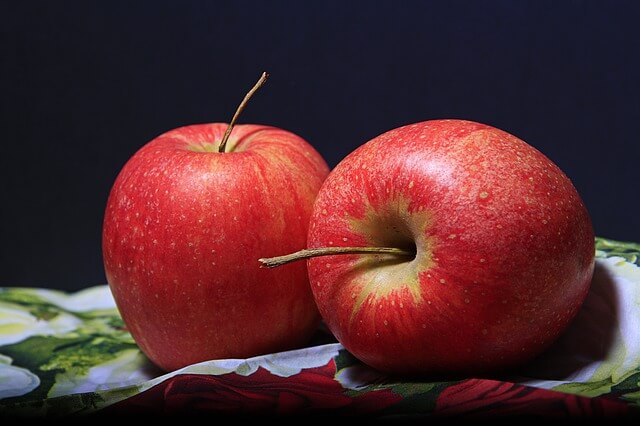
Good Will Hunting fans and language lovers alike have wondered about the origin of “How do you like them apples?”
Where on earth did this phrase come from? Orchard owners? Apple thieves? Really proud produce managers?
The exact etymology of the phrase “How do you like them apples?” is a bit fuzzy, but many sources point to the idea that a specific type of mortar during World War I was nicknamed a “toffee apple.” It was large and spherical, which didn’t allow it to fully fit in the firing tube and gave it a candy apple appearance. It’s believed that the soldiers in the trenches were the first to say this phrase, “How do you like them apples?” upon firing the mortars across enemy lines.
More brutal than you expected?
Etymology, man. Stealing phrases from the trenches. Literally.

 If you’re doing lots of naval-gazing, maybe you’re missing a sailor or maybe you’re a spy. But I’m guessing it might just be a typo if you’re writing about excessive introspection.

 When local television news viewers start calling out meteorologists on their weather-specific grammar, you know people are in that end-of-winter, dark, gloomy, living-in-their-
 Often, when I’m giving
  Who is this Nick we speak of? He must be a time-traveler. No, that doesn’t sound right. It must be “knick of time,” right? Right?