What is distinctive about the kitten in the middle? There is a distinct, observable difference that distinguishes her from her litter-mates. You could say she’s distinctively colored. Or you could forget all this and just go cuddle a kitten…
It is my distinct pleasure to delve deep into the distinct differences between “distinct” vs. “distinctive.” How do we distinguish one from the other? What is distinctive about each? How are “distinct,” “distinctive,” and “distinguished” not so distantly related? It’s time we figured this out.
I know I’m not the only one who’s written the word “distinctive” and then paused—convinced it should actually be “distinct,” or should it be?
And then there’s the Quiver Tree, native to Africa, also known as kokerboom in Afrikaans. Does it ever quiver when flocks of birds leave its branches? Is there any legend about its quavering voice? I don’t think so, but the hollow stems of this massive variety of the aloe family have a long history of being used for arrow quivers. Cool, huh? Plus, these quiver tree quivers probably made many people quiver over the years. (How’s that for a correct but slightly complicated sentence?)
Your hand might quiver. Your voice might quaver. Your arrows might sit at the ready, but what’s their location strapped to your back called again?
That’s right. The word “quiver” can be tricky because it means different things—many of which are ready to be a part of an action-packed story—but it doesn’t mean everything you might think it does.
If you’re hoping it’ll be a pick-me-up to be picked up by a pickup, you surely must have a handle on your language. But just in case you’re slightly baffled and would rather go find a pick-up game you’d rather be a part of, let’s take a moment to pick through these possibilities. They’re always good to know if you’re in a pickle.
The mill “ground” the grain or the mill “grinded” the grain? What’s your answer? How confident are you?
What is the past tense of “grind”?
I’m asking this as someone who might grind coffee beans, not as someone dancing scandalously at a club. Yes, this changes the answer. Does that give you enough of a hint to know the difference?
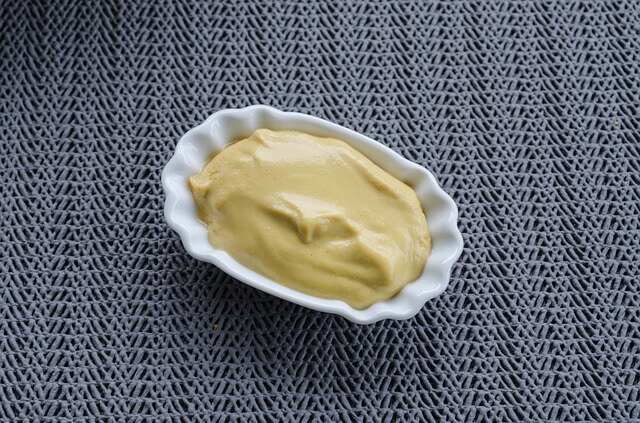
To “pass muster” is completely different from “passing mustard.” One involves acceptance and one might just involve your hot dog.
Dinner parties with a crowd you don’t know well can be complicated. Sometimes, you need to dress and act appropriately, and sometimes, you need to give your neighbor the appropriate condiment.
So next time you’re worried about whether the expression is “to pass muster” or “to pass mustard,” remember:
If you want to go zero to sixty in a matter of seconds, speed-racer, you’re going to have an eye on the tools on your dashboard. Your speedometer, your odometer, your tachometer—these are all types of what?
You’ve probably got a handle on “gag,” “gaggle,” and “gouge,” but when it comes to “gage” and “gauge,” which both rhyme with “age” and “sage,” there’s often a moment of pause.
Perhaps I just made things worse by giving “age” and “sage” as the comparable words.
Remember:
“Gauge” is probably the word you’re looking for on most occasions. It can be either a tool that displays a measure of some kind—like an air gauge, speed gauge, or temperature gauge—or as a verb, it can be to judge, measure, or assess.
“Gage” might be your first guess at spelling the previous word (a typo found commonly online), but it’s not the same word. A “gage” is a pledge or something given like collateral. Shakespeare also used “gage” to refer to a glove thrown down in a challenge. No matter which meaning, it’s not a word frequently used.
“Cousin, throw up your gage,” says Shakespeare.
You, on the other hand, will almost always use “gauge,” I’m guessing.
Now, if you’re feeling a bit shamefaced because you’ve gotten this wrong in the past, there’s no need to race off in your car. “Gauge” first came to English in the 15th century, but the thing about the 15th century was that standardized spelling wasn’t really stressed. So, therefore, “gauge” and “gage” were used interchangeably. Yep, there’s a precedent for this confusion.
However, “gauge,” as we know it and use it, became preferred in the late 19th century and has been ever since. This is the version you should stick with.
I don’t need to gauge your interest in the correct spelling, but I would recommend it.
If you want to get technical, you can “riffle” through the pages while you’re in the process of “rifling” through a collection of documents. Would a thief pause to appreciate the linguistic proximity? Probably not. But you can at least enjoy it.
This isn’t a gun debate. It’s a verb debate. And neither of them has anything to do with firearms.
There is a difference between “riffling” and “rifling” through the pages of your favorite writing reference book. Both are possible. But I’m guessing there’s only one that you mean.
And seriously, if you’re confused, please get those guns out of your head. That’s not where I’m going here.
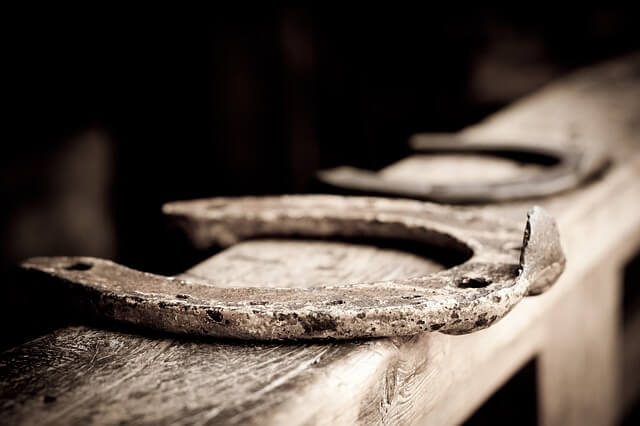
Some people have horseshoes for luck. Here’s one for luck with your spelling.
You can see it, can’t you? There’s the racehorse in the starting gate. He’s hoofing the ground. He’s whinnying. He’s chomping on his bit impatiently waiting for the starting gun to fire…
But the problem is, “chomping at the bit” isn’t the correct expression. The second problem is that “champing” and “chomping” are so incredibly close, this distinction is confusing in itself.
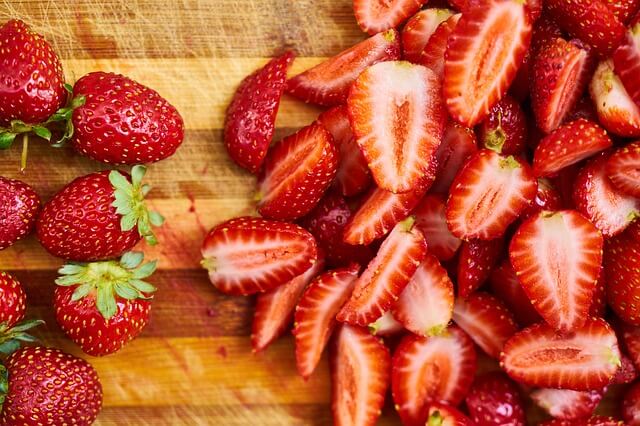
Drool-worthy, right? But what does that mean for your appetite?
When people talk about enticing you, they aren’t talking about making you drool. The question about how do you spell “whetting” your appetite comes up often, and I think it often comes back to confusion about that saliva.
You see something delicious and you salivate. Sure, I get it, but that has nothing to do with this expression.
If we’re mixing idioms, there might be something about kicking a bucket then going beyond the pail, but whatever the origin story your mind is making up for that one, don’t give it a second more of contemplation.
“Beyond the Pail” isn’t an expression. It could be where you walk past if you’re retrieving water from your spigot, but there are no pails or buckets involved in this old phrase.
“Beyond the pale” is the correct idiom, meaning something that is out of bounds or beyond what is acceptable. It speaks sometimes to the bizarre and sometimes to a lack of propriety or even the offensive.
The origin of “beyond the pale” seems to harken back to a definition of “pale” that you might not have heard of. We’re not talking about the skin of someone who has seen a ghost or who stays clear of the sun. We’re talking about a definition that comes from the Old English word pāl, and as a hint, the word “pole” derives from this same word.
Historically, a “pale” is a pointed wooden stake that creates a barrier or marks off an enclosure. It can sometimes reference the enclosed area or jurisdiction itself, such as an Irish Pale or the Pale of Calais in France (note the capitalization), which were both historical districts.
If you’re going to the beach, don’t stress about going beyond the pail. If you spend some time soaking up the sun, you might go beyond the paleness of your winter-weary skin, but be sure not to act beyond the pale or the lifeguard might ask you to leave.
Kicking buckets—both literal and metaphorical—is probably best to be avoided. As for pails and pales, it’s good to know the difference and, when necessary, to act (and spell) accordingly.


 If you’re hoping it’ll be a pick-me-up to be picked up by a pickup, you surely must have a handle on your language. But just in case you’re slightly baffled and would rather go find a pick-up game you’d rather be a part of, let’s take a moment to pick through these possibilities. They’re always good to know if you’re in a pickle.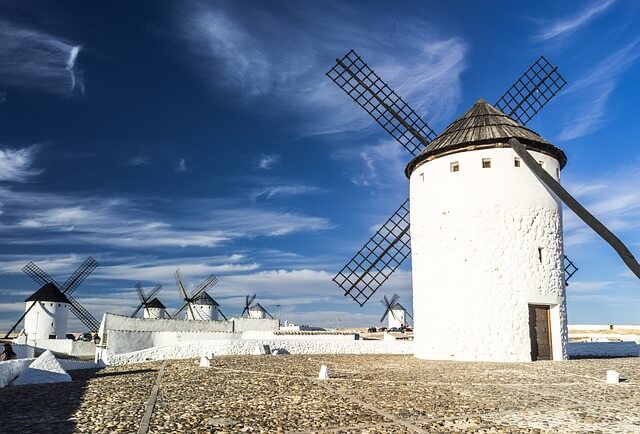
 If you want to go zero to sixty in a matter of seconds, speed-racer, you’re going to have an eye on the tools on your dashboard. Your speedometer, your odometer, your tachometer—these are all types of what?
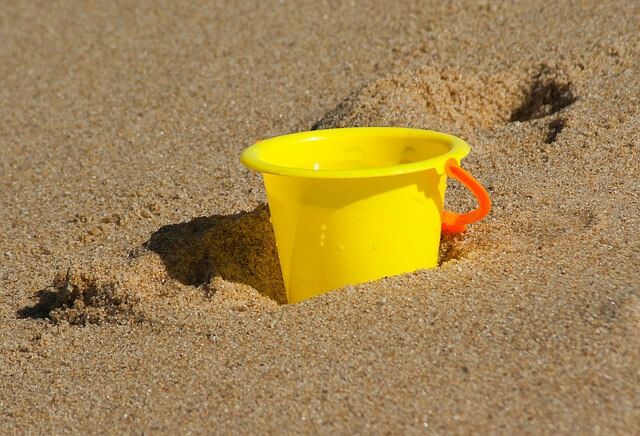 If we’re mixing idioms, there might be something about kicking a bucket then going beyond the pail, but whatever the origin story your mind is making up for that one, don’t give it a second more of contemplation.