The Origin & Value of “Look Before You Leap”
Today, like so many days, I urge you to look before you leap.
Maybe it’s a matter of what you choose for breakfast. Maybe it’s what you decide to speak up about to your boss. Maybe it’s a matter of who you decide to vote for.
We make so many decisions big and small on a daily basis, but they can’t all be taken lightly. We can’t just eat our Wheaties because that’s what everyone else is eating or because someone who may or may not have been fully trustworthy told us that this was the best choice for our future health.
Look before you leap, people.
It’s all about thinking, paying attention, and taking on the world in a way where the world won’t drop out under your feet.
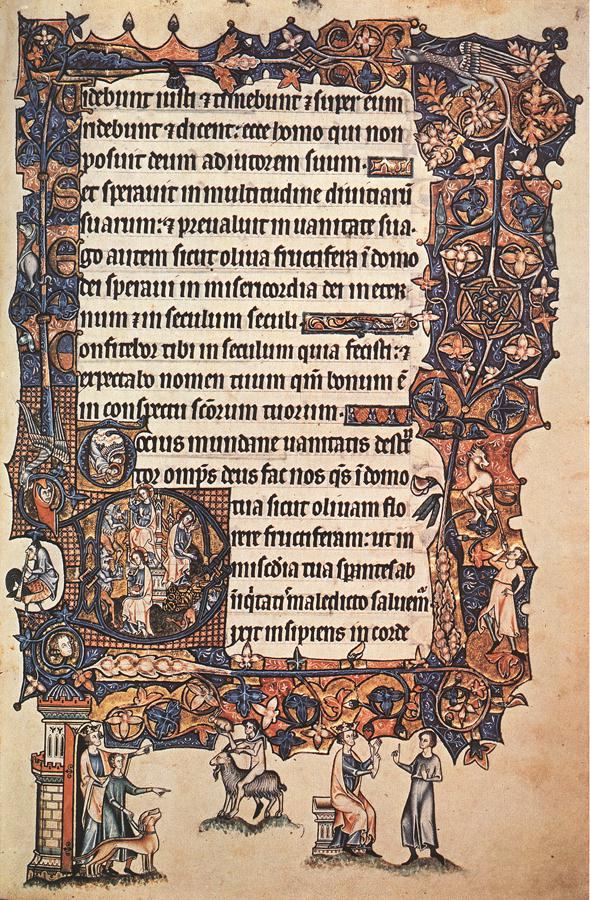
Of course, the phrase “look before you leap” goes as far back as at least 1350 (see the illuminated manuscript at the right). It’s first known English citation is within an a collection of proverbs by John Heywood in 1546, and it’s first use in the United States was in 1677 in the History of Indian Wars in New England.
It’s a saying that has been around for a long time and for good reason.
Etymology aside, “look before you leap” is sage advice–advice you should embrace with every important choice you make in your life. Your landings will prove much kinder that way.
There seems to be a recent trend of people doing a lot of listening and nodding their heads but not taking a good look around for themselves. Observation and reflection are amazing tools of the human mind. What does your gut say about the situation? It may or may not be in agreement with the crowd closest to you. But if it’s what you believe, that’s okay. In fact, if you made your decision and took your leap after making up your own mind about all of the facts at hand, that’s kind of fabulous. At least, that’s my two cents.
References:
“English Illuminated Manuscripts.” Web Gallery of Art. Accessed November 6, 2016. http://www.wga.hu/html_m/zgothic/miniatur/1301-350/1english/
Titelman, Greogory Y. Random House Dictionary of Popular Proverbs and Sayings. New York: Random House Reference, 1996.