If I were you, I’d be a bit cautious if someone wanted to envelope you in their arms. Does this mean they’re going to put you into a giant package and ship you off somewhere? Or perhaps this is just a typo. I’m guessing it’s a typo. But it’s typos like this that always give me pause. You can do better, folks.
What is a question that can bring a novelist to hysterical laughter? What is sometimes a writer’s nemesis and sometimes a friend? The following interview with historical romance novelist and editor Jennifer Delamere provides the answers.
I met Jennifer at one of my Grammartopia events last fall in Durham, North Carolina, where she didn’t just compete, but her grammar prowess won the day. I admired her work before that time, of course, but getting to banter with her about the plural of mongoose and Oxford commas made me realize I’d found a kindred editorial spirit. Enjoy this interview, writers. There are a lot of great nuggets inside.
Jennifer Delamere writes tales of the past…and new beginnings. Her Victorian-set novels have won many accolades, including finalist for the Romance Writers of America RITA® award, a starred review from Publishers Weekly, and the Georgia Romance Writers Maggie Award for Excellence. Jennifer earned a B.A. in English from McGill University in Montreal, Canada, where she became fluent in French and developed an abiding passion for winter sports. She’s been an editor of nonfiction and educational materials for over two decades. She loves reading classics and histories, which she mines for the vivid details to bring to life the people and places in her books.
Nothing makes you feel less like a graduate than failing your first real-world spelling test. Do you know the difference between “alumnus,” “alumna,” “alumnae” & “alumni”?
When people start talking Latin origins and uncommon spelling forms, tension begins to build in some secret place where childhood spelling bee angst hides. When we start adding word gender form into the conversation, there’s a tendency for hands to be tossed into the air. But sometimes, there are moments for tossing up graduation caps rather than hands. And in these cases, you need to make sure you’re prepared.
Is it beautiful? Sure. At least until there’s confusion over whether we’re talking about stalks, stalking, or investment opportunities.
Being someone who stocks things is good. Being someone who stocks or stalks people is bad. Being someone who stalks things could go either way—but I’m guessing there has to be a story there.
We can talk about corn stalks or agricultural stocks on the New York Stock Exchange. We can talk about stockings made of silk or a stalking horse, but whichever form you intend, make sure you’re spelling it right. Neither farmers, not investors do well when they’re careless.
If someone is gamboling while gambling, either the bartender should cut them off or, maybe, they’re having a really lucky muppet-arms and how-do-you-like-them-apples kind of day.
Sometimes pressing send on an important communication can feel like a gamble. When you misspell a word that spellcheck doesn’t catch—like applying to be a “manger” rather than a “manager” (ouch!)—it can really hurt the cause. Typos can sometimes sneak into our writing when you aren’t looking (or when you forget to proof yourself), and here’s one more you need to make sure to get right to make those big emails slightly less of a “gamble,” “gambol,” or otherwise.
If you’re walking into a Vegas hotel, maybe you’re getting ready to gamble. If you’re gamboling through the door of that hotel, that’s something quite different.
There aren’t many expressions that have their origins in board games, but “to turn the tables” on someone—meaning to change someone’s fortunes—comes from exactly that source.
Get a Grip on Your Grammar: 250 Writing and Editing Reminders for the Curious or Confused is turning one year old this week! Time flies when you’re having fun and scribbling up a storm. To celebrate, I’m giving away three copies of Get a Grip to whoever shares the best answers to the following question:
What is the best writing tip you’ve ever received or that you wish you’d been told?
#GetAGripWritingTip Contest Rules:
Keep your answers 3 sentences or fewer.
Be funny. Be honest. Be sincere. Be however you’d like to be. But share your best wisdom.
One entry per person (i.e., a single individual can only win one book.)
All entrants will receive Kris’s “25 Fiction Writing Redundancies” AND “25 Business Writing Redundancies,” as well as access to Kris’s monthly writing tips newsletter.
The best 3 pieces of advice, as chosen by Kris, will be announced by noon EST on April 25, 2018. The 3 winners will be notified via email and will each receive a copy of Get a Grip on Your Grammar.
#mc_embed_signup{background:#fff; clear:left; font:14px Helvetica,Arial,sans-serif; } /* Add your own MailChimp form style overrides in your site stylesheet or in this style block. We recommend moving this block and the preceding CSS link to the HEAD of your HTML file. */
Enter Here:
* indicates required
Sharing Permissions
(function($) {window.fnames = new Array(); window.ftypes = new Array();fnames[5]=\’MMERGE5\’;ftypes[5]=\’text\’;fnames[0]=\’EMAIL\’;ftypes[0]=\’email\’;fnames[1]=\’FNAME\’;ftypes[1]=\’text\’;fnames[2]=\’LNAME\’;ftypes[2]=\’text\’;fnames[3]=\’MMERGE3\’;ftypes[3]=\’text\’;}(jQuery));var $mcj = jQuery.noConflict(true);
Thank you for so many great #GetAGripWritingTips entries, and congrats to the winners, A.B. Westrick, Scarlett Heinbuch, and Tom Garguilo!
Some writers take years upon years for a single project, and some writers produce a library in just a few rotations around the sun. Lee Savino falls into the latter category. She released seven books in 2017 and expects to release about ten novels in 2018, not to mention a few novellas.
Successful writers like this amaze me, not just for their impressive output but in their editing processes as well. All writers know that editing is an essential piece of the publishing process, but when you’re publishing so frequently, efficiency is essential.
How does she do it? The following Authors on Editing interview was set up just so I could find out!
This artist spatters paint; Jackson Pollock had a tendency to splatter. Do you know the difference?
Before April showers bring May flowers, there are a lot of puddles around. If you’re inclined to splash around in your galoshes, you need to know the difference between “spatter” vs. “splatter.” Neither are misspellings. And there is a difference.
Take a moment with this one. Any guesses?
Here’s a hint: “Splatter” appears to actually be an old portmanteau, a squishing together of “splash” and “spatter” in the vein of frenemy, brunch, or nowadays. Its first known use was in 1785.
The last thing you want is to get burned by your language use, especially when talking to a baker.
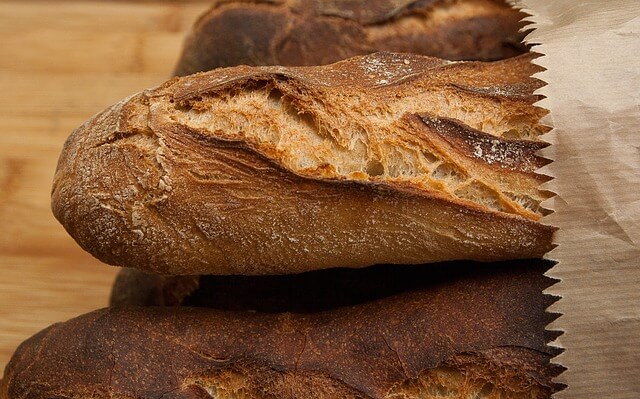
Half of a loaf may be better than none, as the saying goes, but for those lucky enough to have more than one loaf, do you know how to pluralize this noun?
Spellcheck isn’t going to help you.
Neither are similar words that end in “s.” “Knife” becomes “knives,” and “dwarf” becomes “dwarfs” after all. (Oh, it’s true. And I hear you, ghost of Tolkien. Stop messing with people on this one!)
 If I were you, I’d be a bit cautious if someone wanted to envelope you in their arms. Does this mean they’re going to put you into a giant package and ship you off somewhere? Or perhaps this is just a typo. I’m guessing it’s a typo. But it’s typos like this that always give me pause. You can do better, folks.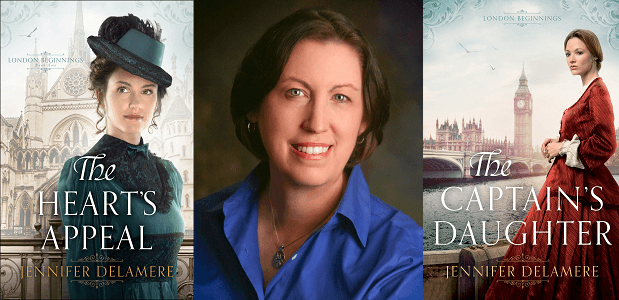
 Nothing makes you feel less like a graduate than failing your first real-world spelling test. Do you know the difference between “alumnus,” “alumna,” “alumnae” & “alumni”?